
If you’ve been to a mastermind recently—or just checked your inbox—you’ve probably noticed a theme.
AI leads. AI citations. AI everything. Don’t get left behind. The remodelers who will win the next decade are already doing this. Most haven’t even started.
You’ve heard this kind of thing before. Different technology, same energy.
Here’s my honest take on what’s actually worth paying attention to — and what isn’t.
First, what’s true
AI search is real. The shift is real. Homeowners are increasingly using tools like ChatGPT and Perplexity to research remodeling projects — asking questions, comparing options, and forming opinions about which firms seem credible before they ever visit a website.
AI Overviews in Google are real, too. When a homeowner searches “how much does a home addition cost in Northern Virginia,” there’s a growing chance they see an AI-generated summary before they see a single organic result. And yes, the sources that get cited in those summaries are getting visibility that didn’t exist two years ago.
None of that is hype. It’s worth understanding.
Here’s where it gets oversold
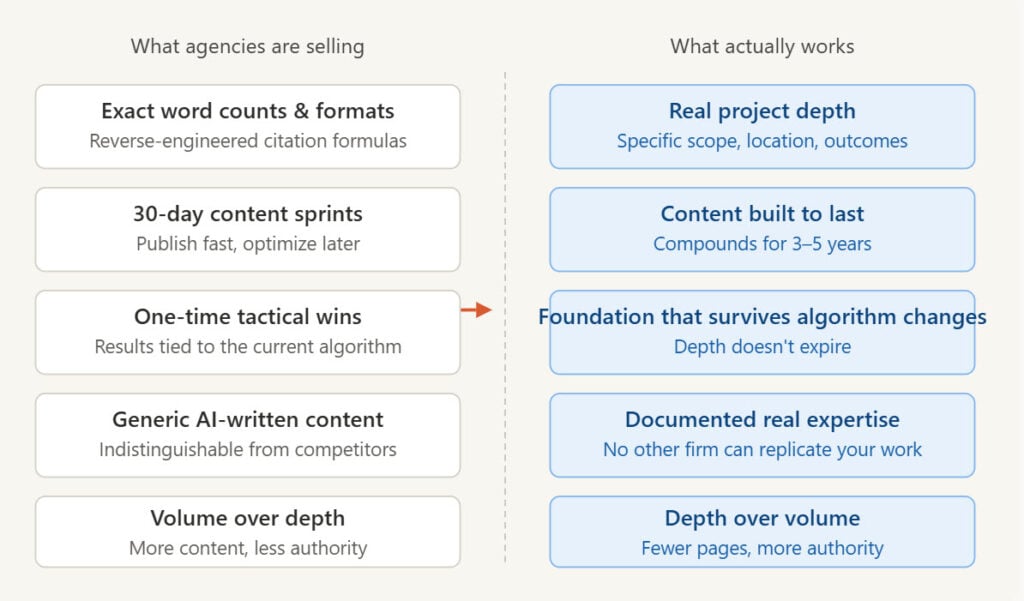
The part I’d push back on is the idea that there’s a formula. A specific word count. A tactical structure. A 30-day sprint that gets your content cited by AI engines.
But here’s what I’ve watched happen every time a new algorithm or platform shift creates a window of opportunity: agencies rush to package it, sell urgency around it, and by the time most remodelers implement the “exact formula,” the window has already moved.
You’ve seen this. You’ve been in this industry long enough to remember when everyone needed a Facebook page, then a Facebook ad strategy, then a video strategy, then a TikTok presence. The tactics change constantly. The firms selling those tactics always have a case study or two to point to.
One $2.5 million project from ChatGPT is a great story. It’s not a methodology.
What actually wins in AI search
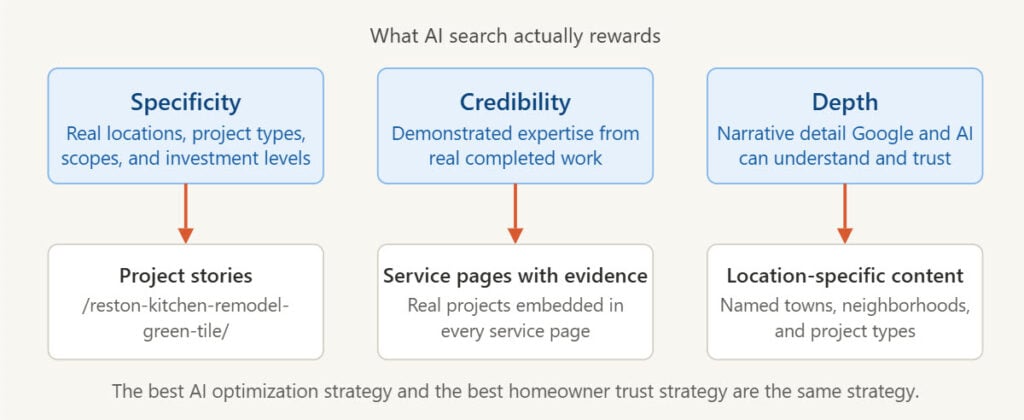
Here’s the thing nobody selling the urgency wants to say out loud: the best AI optimization strategy and the best homeowner trust strategy are exactly the same strategy.
AI engines — whether that’s Google’s AI Overview, ChatGPT, or Perplexity — are trying to surface content that is specific, credible, authoritative, and trustworthy. They reward depth over volume. They reward real expertise over generic advice. They reward content that demonstrates actual experience with actual projects in actual locations.
Which means the remodeling firm that has spent the last two years publishing detailed project stories — real projects, real locations, real scope, real outcomes — is already doing AI optimization. They just didn’t know to call it that.
And the firm that rushes to publish a tactically formatted blog post because someone told them it’s the exact structure AI engines are citing right now? That content will age poorly.
Because the formula will change. The depth won’t.
The question worth asking
I keep coming back to something I said in my last newsletter: the question isn’t just how do we get found? It’s what are homeowners seeing when they find us?
That question matters more in AI search, not less.
When an AI engine surfaces your firm as a credible source, it’s not because you hit a word count target. It’s because your content demonstrated genuine expertise about a specific type of project, in a specific market, at a specific investment level. It’s because there was enough depth and specificity for the AI to trust that you actually know what you’re talking about.
That’s the same thing that makes a homeowner trust you enough to call.
What I’d actually recommend
If you’re feeling pressure to “do something about AI search” right now, here’s where I’d focus:
Document your real work — and put it where it matters most. Project stories are the highest-value content a remodeling firm can publish. But here’s something most remodelers haven’t addressed yet: your service pages need the same treatment.
Google is increasingly rewarding pages that demonstrate local expertise with real project evidence. A checklist of kitchen features or a list of what’s included in a bathroom remodel doesn’t do that. A service page that says “here’s a kitchen we rebuilt in a 1980s Vienna colonial, here’s what that involved, here’s the scope” — that does.
Most remodeling service pages describe what a firm offers. Google wants to see what they’ve actually built, where, and for whom. That’s a significant shift — and most firms haven’t caught up to it yet.
Stop publishing generic content. If your blog looks like every other remodeling blog in America — seasonal tips, trend roundups, FAQ articles — it’s not helping you with traditional search, and it’s not helping you with AI search. Specificity wins. Generic content is increasingly invisible.
Think about visibility quality, not just visibility volume. Getting cited by an AI engine for the wrong projects or the wrong budget range isn’t a win. Better visibility means being found by the right homeowners, in the right context, with enough information to know you’re the right fit.
The firms that win won’t be the ones that moved fastest
They’ll be the ones who built something worth finding.
Real project depth. Real expertise. Real documentation of real work done in real places. That’s what AI search rewards. That’s what homeowners trust. And that’s what no 30-day sprint can manufacture.
You’ve been building your reputation for 10, 15, 20 years. Your marketing should reflect that — not chase the next formula someone is selling from a webinar stage.